Building an audience on a third-party social network can be useful, but it also creates a dependency. Reach can change, policies can change and the relationship between a brand and its members can be mediated by an algorithm that the community owner does not control.
Ownership changes the relationship
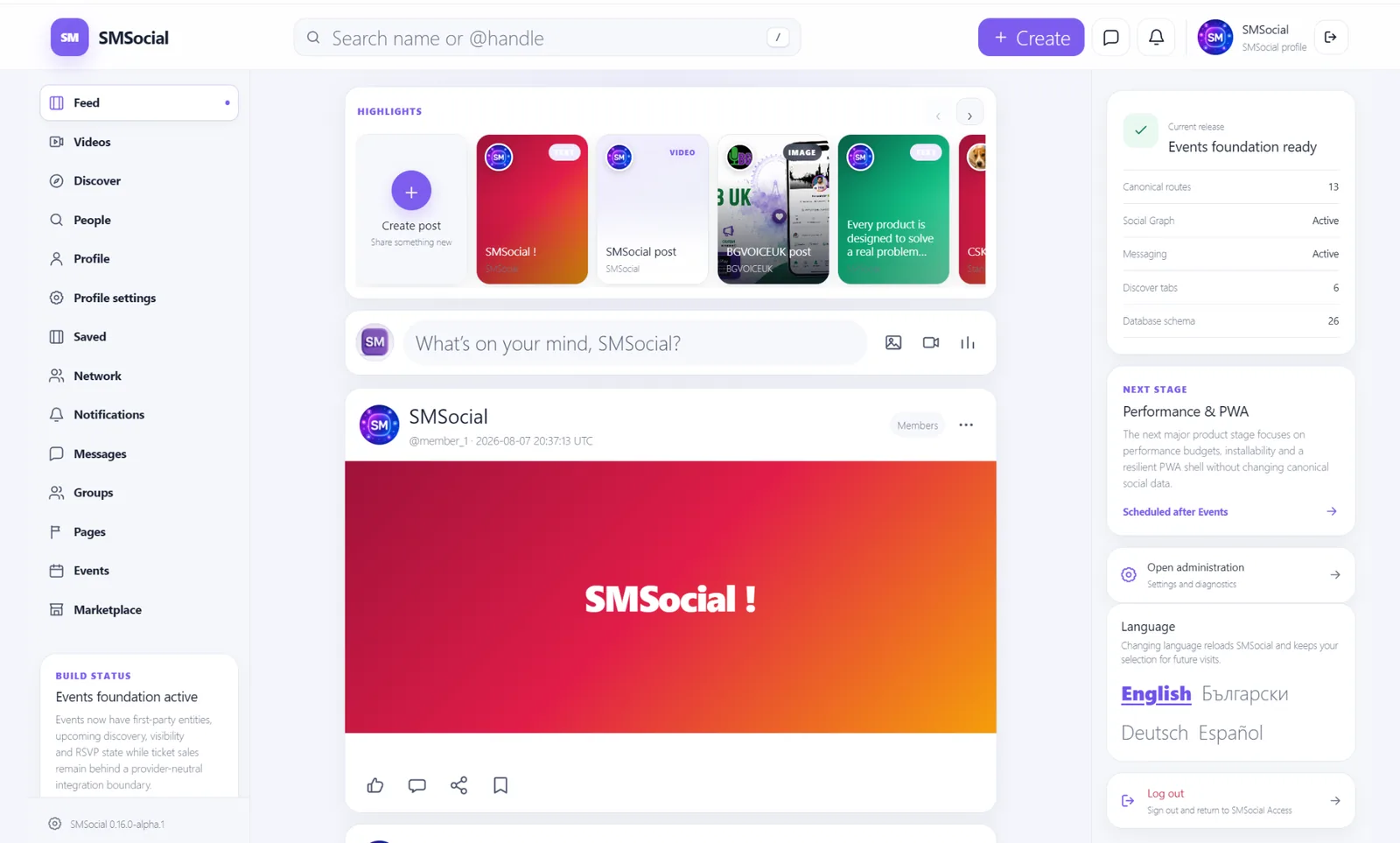
When the social experience lives on your WordPress site, the website is no longer only a publishing destination. Profiles, conversations, community activity and events can become part of the same branded environment as your content and services.
That does not mean abandoning external social networks. They remain valuable discovery channels. The difference is that your own community becomes the destination rather than another rented profile.
What “own your community” means in practice
- Your brand defines the member experience.
- Your site controls the community entry point and navigation.
- Your content and community activity can live together.
- You decide how the community evolves and which capabilities matter.
- Your business model is not based on SMSocial taking a percentage of member or marketplace revenue.
WordPress is already an ownership platform
WordPress has always been attractive because it gives publishers and businesses control of their web presence. SMSocial extends that principle into the social layer. The aim is not simply to add an activity stream, but to make the community feel like a native part of the site.
For organisations that have spent years building a name, a publication, a membership or a local audience, that distinction matters. The platform should reinforce the brand rather than replace it.