The same social object across Feed, Profile, Group and Page.
Who we are · Why SMSocial
Your community shouldn’t live on rented ground.
Most online communities are built on rented ground. You create the content, build the audience, invest in the brand and spend years earning trust, while another platform ultimately controls the rules, the reach, the algorithm and the relationship with your members.
SMSocial starts from a different idea: if WordPress is already your website, why should it stop at being a website?
Who we are
Building a first-party social platform for WordPress.
SMSocial is being built by SMitov as a first-party social platform for WordPress — not simply an activity-stream add-on and not a cosmetic layer placed over a collection of unrelated systems.
Our goal is to give WordPress owners a serious foundation for building their own social network around their own community, identity and business model.
Profiles, posts, followers, connections, video, discovery, groups, Pages, events, private messaging, notifications, saved content, Stories and member Marketplace listings can live inside one coherent experience. More importantly, the architecture underneath them is designed to behave as one system rather than a collection of features that happen to share the same screen.
One social core
One activity. One relationship model. One source of truth.
At the centre of SMSocial is a canonical Activity system. A post should not become one object in the main feed, another on a profile and yet another inside a group. The same activity model is designed to power the feed, member profiles, groups, Pages and other social surfaces, with shared services for reactions, comments, replies, sharing, saving and moderation.
Alongside Activity, SMSocial is being developed around its own Social Graph. Following, connections, blocking and relationships between members form part of the core social data used by profiles, network features, notifications, messaging and discovery.
Following, connections, blocking and network state share one relationship foundation.
Reactions, comments, replies, shares, saves and moderation behave consistently.
Designed as a social product
Desktop structure. Mobile behaviour. The same community.
The interface is designed to feel like a social product rather than a conventional WordPress page. On mobile, the same functions are reorganised for real social use rather than simply shrinking the desktop interface.
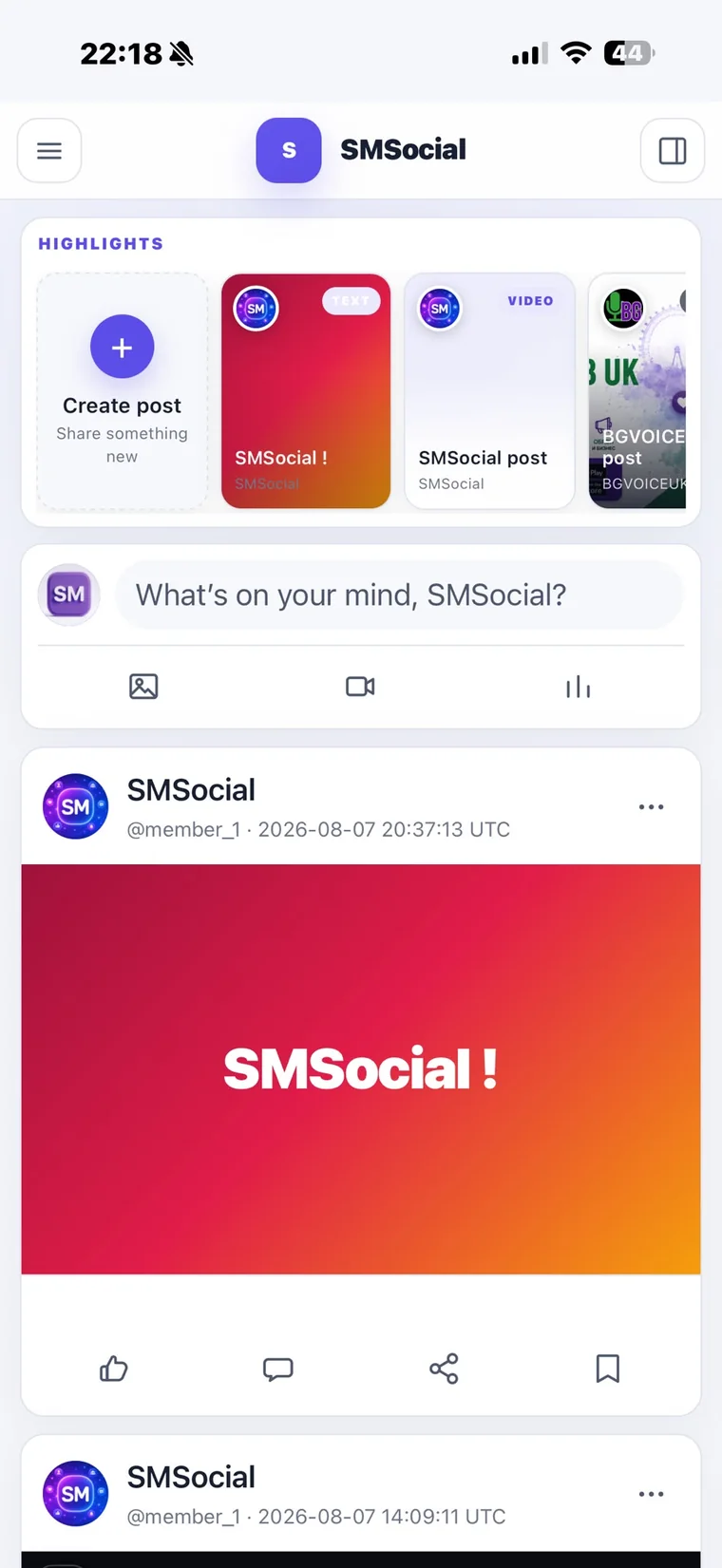
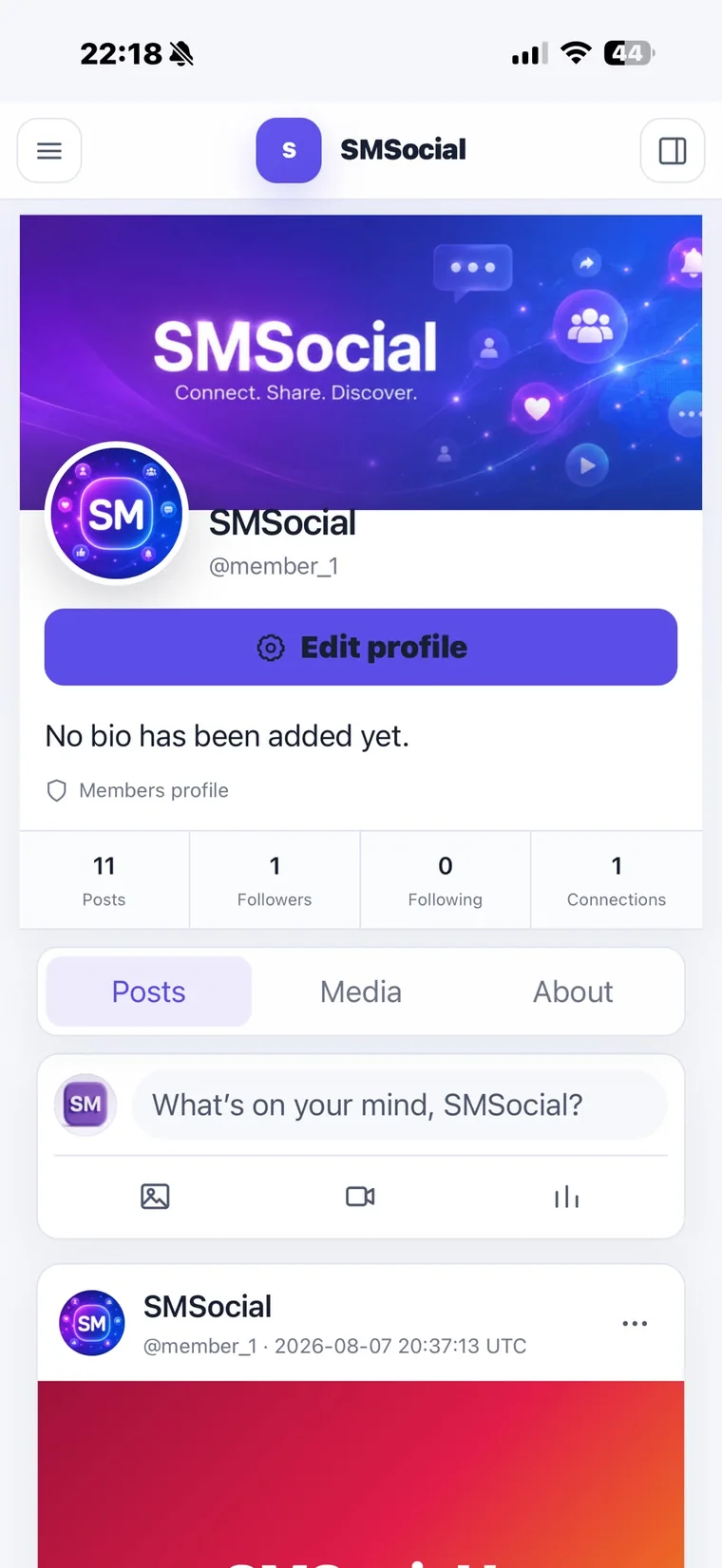
The social areas are part of one experience.
Member profiles combine cover imagery, avatar, biography, Posts, Media and About areas, social statistics and an integrated composer for creating new content.
Built into the real social flow
Features are useful when they share the same context.
SMSocial is designed so the major community surfaces use the same identity, activity and member relationships instead of becoming isolated mini-products.
Part of the real social flow, with viewer behaviour, reactions and administrator-controlled visibility rules.
Article previews can keep the conversation attached to the canonical SMSocial Activity while respecting the original source.
Private communication and alerts remain tied directly to member identity and social activity.
Video content participates in the same Feed, Profile and social interaction model as other activity.
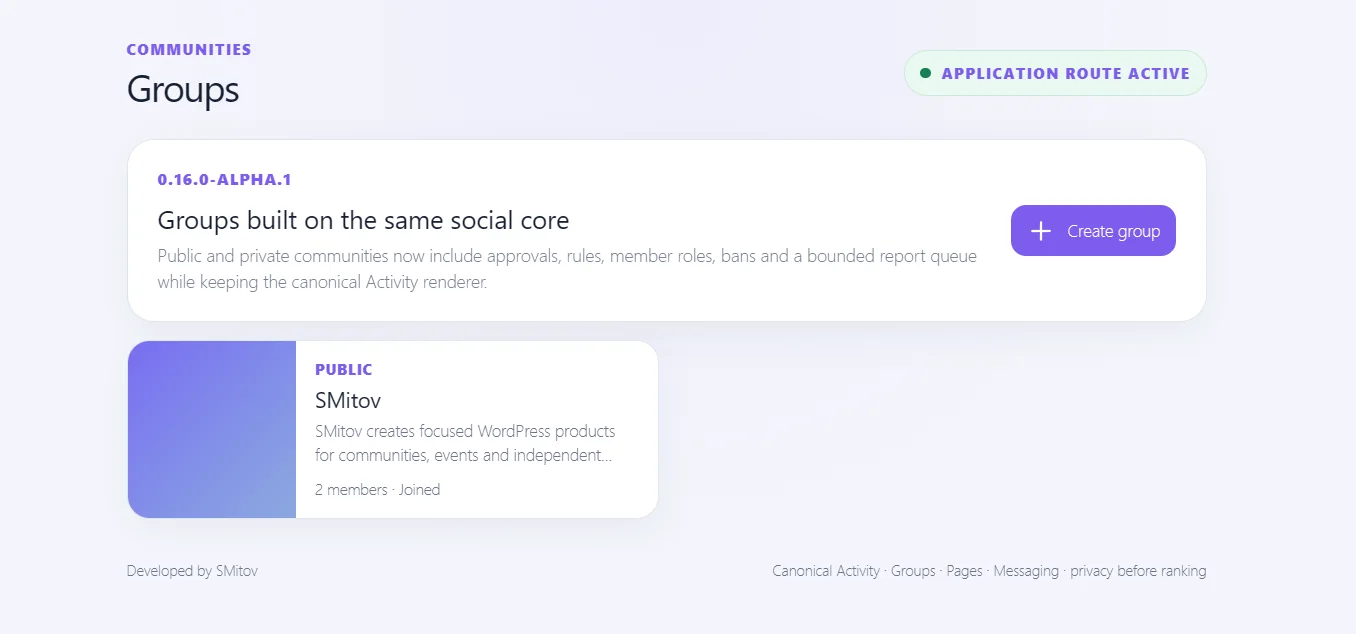
Groups
Communities on the same social core.
Public and private groups use the same Activity foundation rather than creating a second social system inside the platform. Membership, roles and moderation can grow around the same consistent content model.
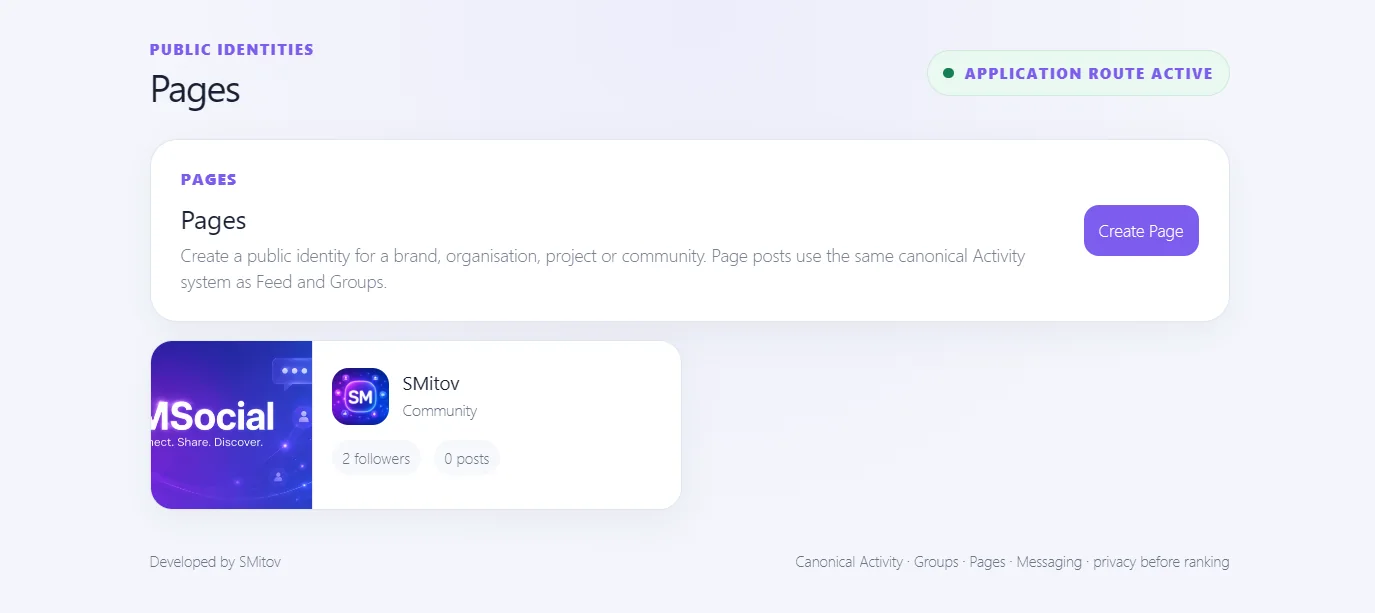
Pages
A first-party identity for organisations and brands.
A business, organisation, project, publication or community can have its own public identity, followers and content without requiring a separate posting, reaction or comment engine.
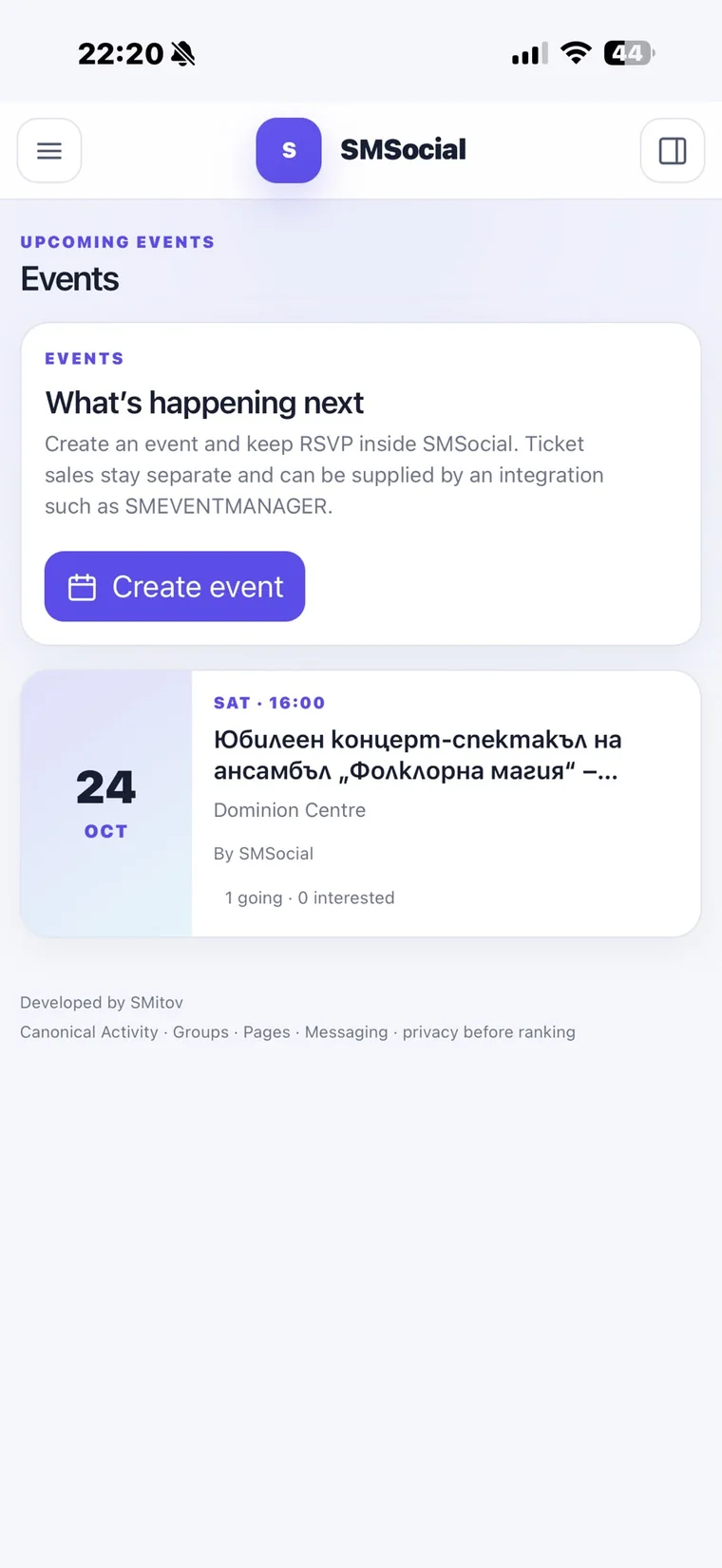
Events
Events live where the community already is.
Members can discover events, interact around them and keep RSVP activity inside SMSocial. Events are treated as first-party social entities rather than detached content cards.
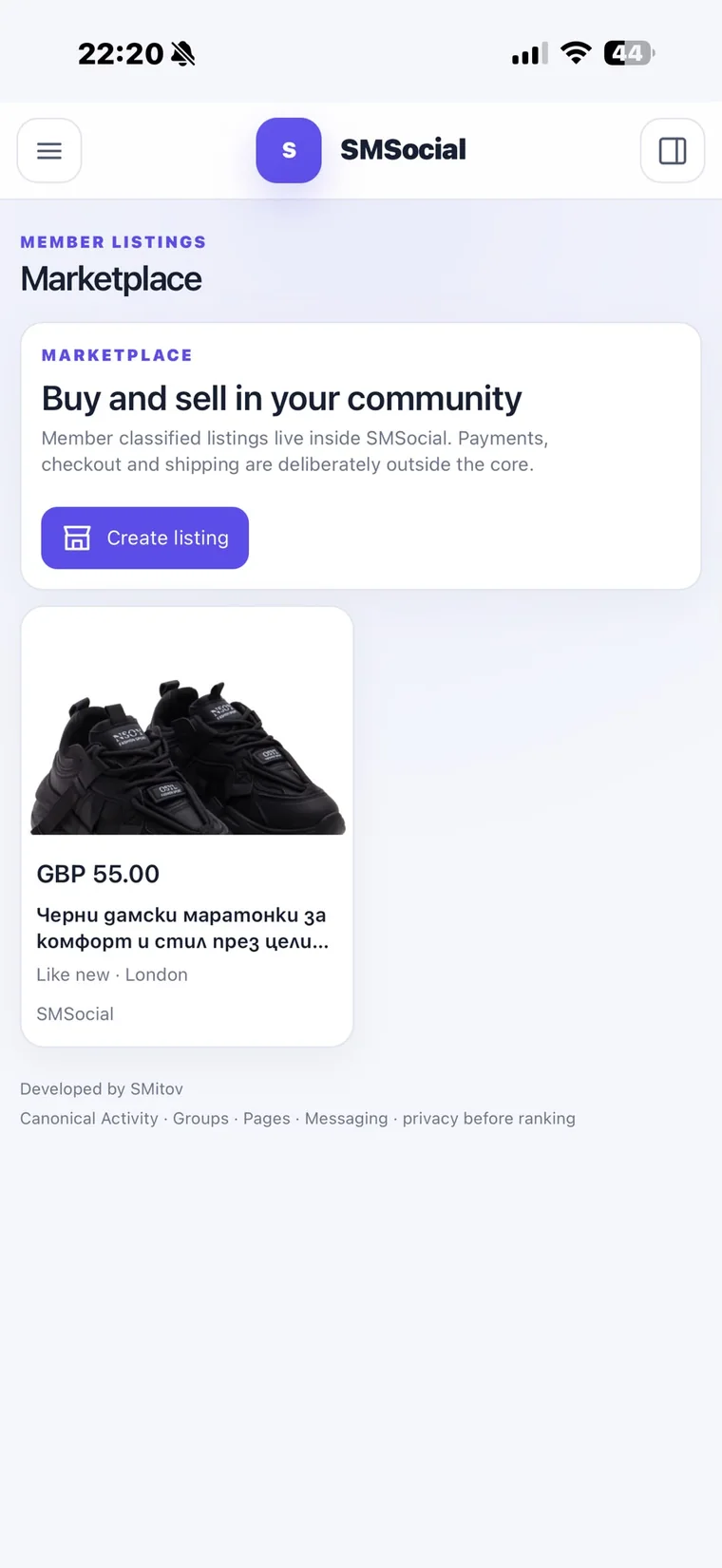
Marketplace
Community listings with social identity attached.
Marketplace gives members a place to buy, sell or advertise within the network while keeping the seller, listing and conversation connected to the wider community experience.
Communication
Notifications and messaging belong to the platform, not beside it.
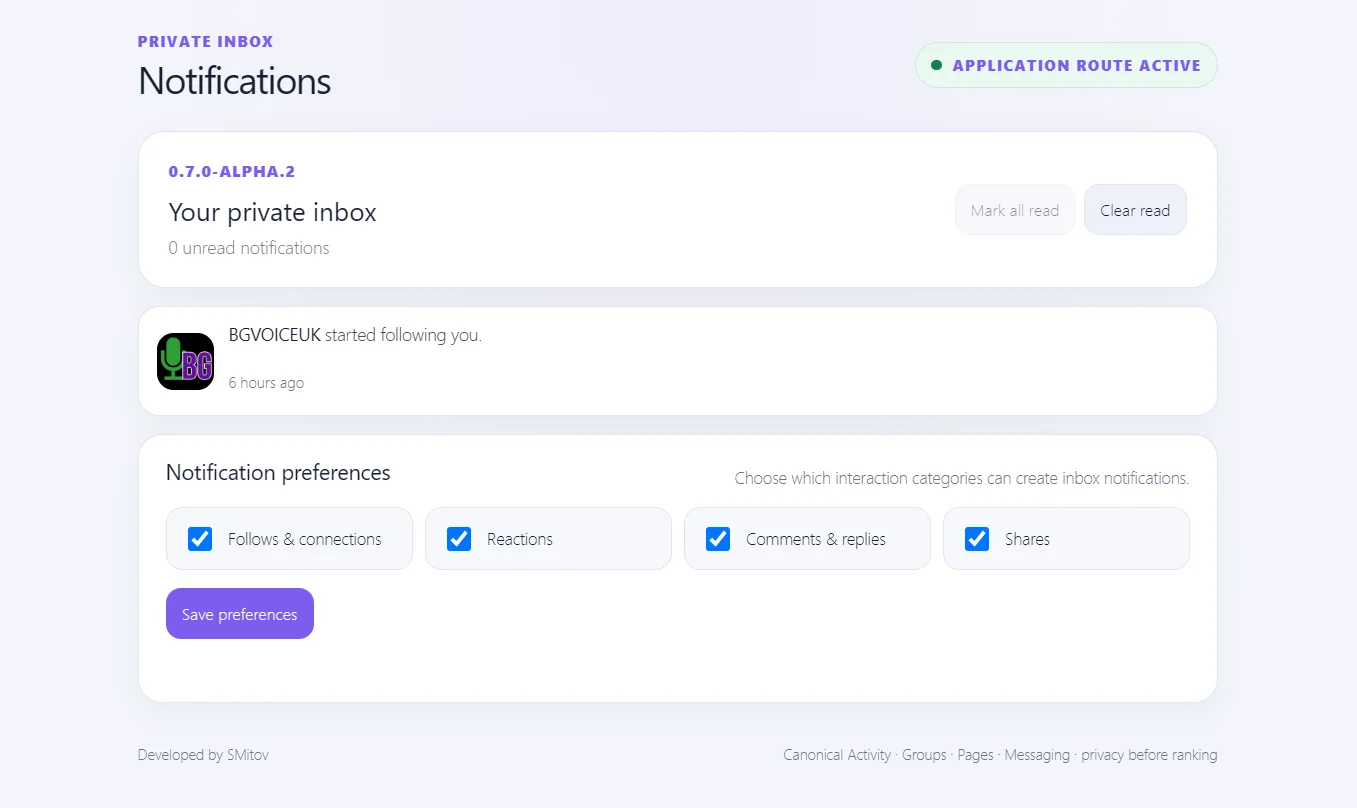
SMSocial includes a private notification inbox and preferences for areas such as follows and connections, reactions, comments and replies, and shares. Messaging is part of the first-party social experience as well.
The UX direction keeps future real-time notification surfaces connected to the same canonical notification state rather than inventing a parallel alert system.
Access & security
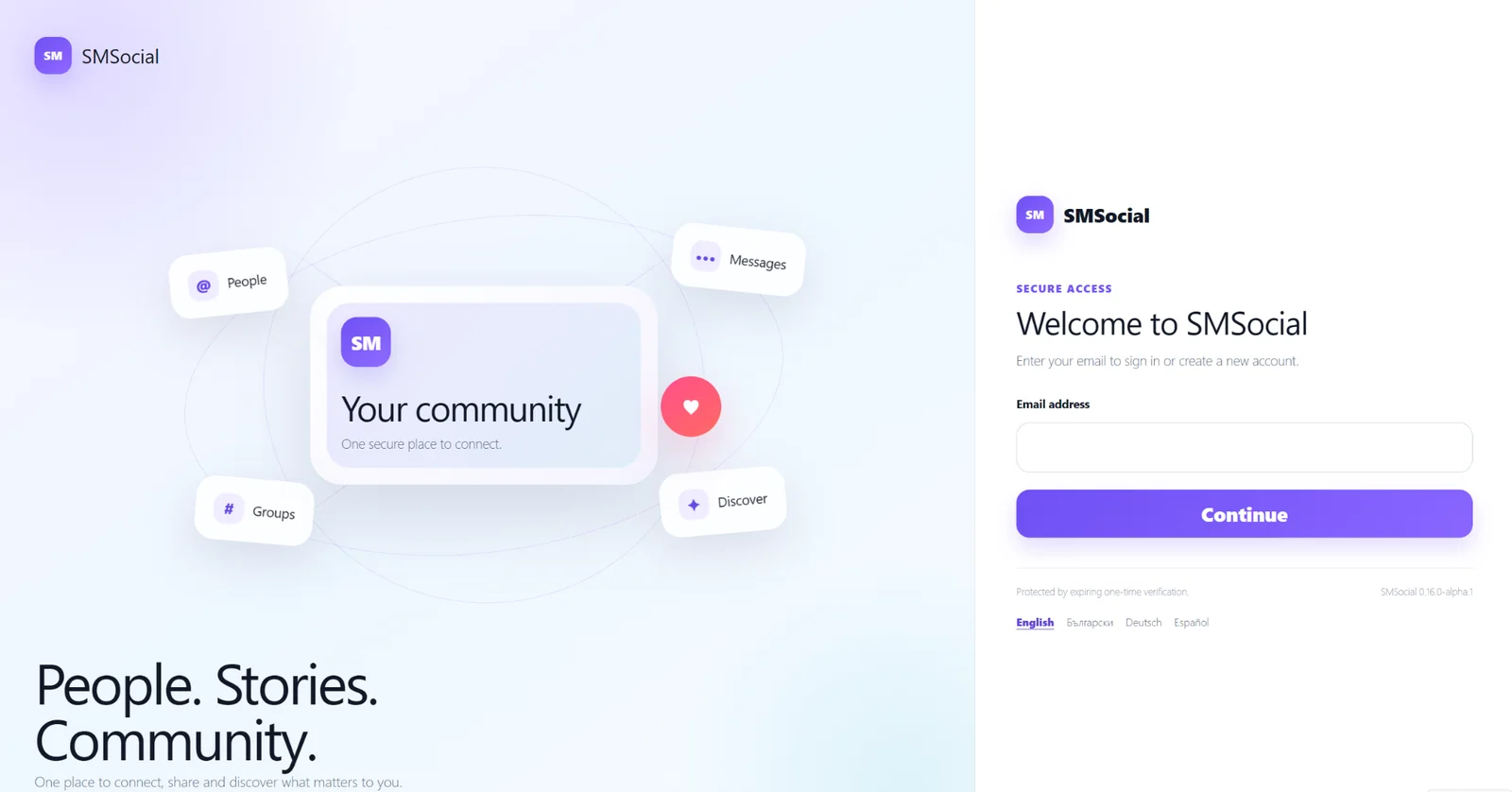
Account access is a product feature. Security is a release gate.
Account access and onboarding are designed around focused registration, verification and recovery flows. Reliable transactional email and authentication diagnostics are part of the operational layer because registration only works when verification actually reaches the member.
Permissions, CSRF protection, sanitisation, escaping, prepared database access, REST and AJAX permission checks, server-side validation and rate limiting are treated as engineering requirements rather than optional finishing work.
Why choose SMSocial
We are building for the larger problem.
If all you need is a basic WordPress activity stream, there are already products that can do that. SMSocial is aimed at a larger problem: giving a site owner the foundation for a recognisable social platform with its own name, community structure and direction without needing to replace the whole system when the project grows beyond a simple feed.
We are not trying to reproduce Facebook inside WordPress feature by feature. We are taking the expectations people now have of a modern social platform and rebuilding the underlying experience around a WordPress owner who wants greater control over the product, the community and the direction of the network.
Your platform. Your community. Your direction.
SMSocial — built for WordPress, designed for communities, developed by SMitov.